Hunter Morris has spent the last several years helping shape one of the nation's premier college baseball programs.
After serving as a volunteer assistant coach at the University of Alabama, where the Crimson Tide developed into one of the Southeastern Conference's most efficient offenses, Morris is beginning a new chapter this fall as the head baseball coach at Florence High School in Alabama.
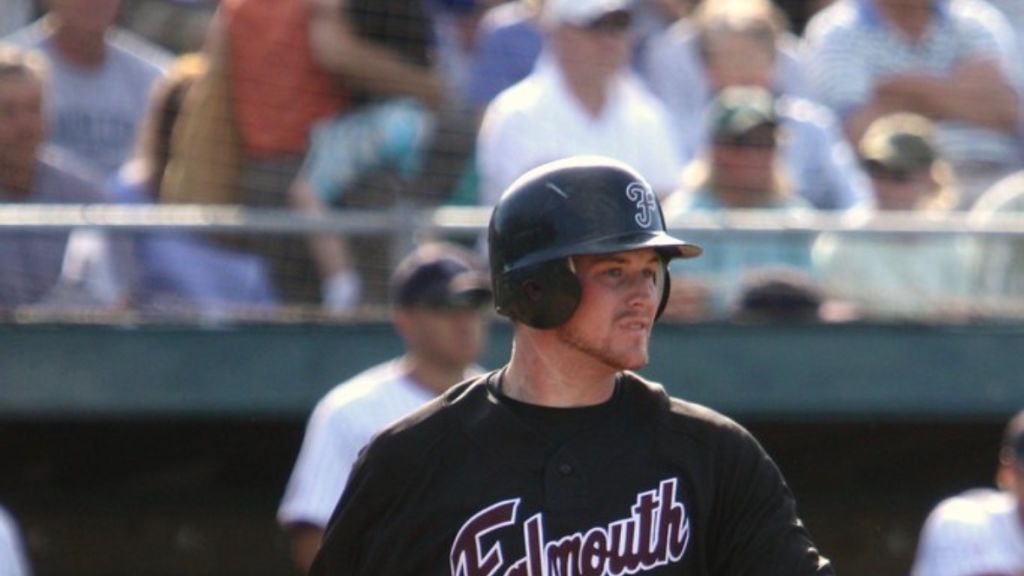
This is the latest stop in a baseball journey that involves Morris winning the SEC Player of the Year at Auburn, playing professional baseball with the Milwaukee Brewers organization, and back in the dugout now as a coach. Before any of those accomplishments, Morris spent a summer in Falmouth that he credits as one of the most influential experiences of his career.
Nearly two decades later, it remains a place he would happily return to.
"I would give anything to do that again," Morris said. "If I could come back up there and spend my summers in Falmouth again, I absolutely would."
For Morris, Falmouth wasn't just an addition to his baseball résumé. It became a place that shaped him twice: First as a player in 2009, and later as a coach in 2017.
When Morris returned to Guv Fuller Field eight years after his summer as a first baseman for the Commodores, he wasn't stepping back to first base. Instead, he found himself a little further over in the first base coaching box, developing another generation of future Major Leaguers while seeing the Cape League through an entirely different perspective.
"I was able to see it through a different lens," Morris said. "As a player, everything moved so fast. I had my routine every day, I was trying to get better, trying to get ready for professional baseball. As a coach, I was able to slow down and really appreciate the experience."
That 2017 Commodores roster featured names that would eventually become stars in the Majors.
Catcher Adley Rutschman was beginning to develop into the player who would later become the No. 1 overall pick in the 2019 MLB Draft. Alec Bohm, Trevor Larnach and Logan Davidson were also among the future first-round selections Morris helped coach that summer.
"It was an incredible group," Morris said. "Adley was in the cage every day. Whether I gave him information that helped him or not didn't matter. He believed in the work, and when you believe in what you're working on, you're going to reap the benefits."
While coaching future stars made for some memorable moments, Morris says the relationships he built in Falmouth were what made his return so meaningful.
No relationship stood out more than the one he shared with longtime Commodores manager Jeff Trundy.
Morris first played for Trundy in 2009 before returning to coach alongside him in 2017, giving him the opportunity to know one of the Cape League's most respected coaches from both sides of the game.
"He was the same guy every single day," Morris said. "He hated losing as much as anybody, but he never carried it with him. Every day was a fresh start."
Rather than dwelling on losses, Morris remembers Trundy focusing on helping each player improve individually, trusting that team success would follow.
"There was not a better human being that I would ever want to emulate in my coaching personality," Morris said.
Those lessons have stayed with Morris throughout his own coaching career.
When he got to Alabama, Morris’ philosophy was simple:
"I'm not here to reinvent the wheel," Morris said, "I'm just here to give players the resources to become the best version of themselves."
Although his coaching experience in Falmouth gave him a new appreciation for the Cape League, Morris says none of it would have happened without the summer he spent there as a player in 2009.
After two seasons at Auburn and a stint with Team USA, Morris made sure he didn't pass up the opportunity to play in the Cape League.
"I wasn't going to miss out on the Cape in 2009," he said. "I couldn't be more thankful for that decision."

Despite arriving at the Cape several weeks late to finish summer classes, Morris quickly became one of Falmouth's top offensive threats, hitting eight home runs and 19 RBI’s while preparing himself for what would become a breakout junior season at Auburn.
More important than the numbers, however, was what happened away from the field.
That summer, Morris amped up his daily routine, dropped nearly 30 pounds and began developing the habits that would carry him into professional baseball.
"The biggest focus that summer was fine tuning a couple little things with my swing and getting my body right," Morris said. "I got in the best shape of my life."
Just as memorable was the family that welcomed him into their home.
Morris credits his host family for making his Cape Cod experience unforgettable, recalling home-cooked meals, a stocked refrigerator and constant support throughout the summer.
"They were absolutely amazing," Morris said. "I still love them to this day."
The Cape also introduced Morris to the type of competition he'd soon face in professional baseball.
To this day, one at-bat still stands out for him.
Facing future 10-time All-Star Chris Sale, Morris remembers calling his advisor beforehand to ask for a scouting report before grounding out in his lone career plate appearance against the left-hander.
Looking back now, he laughs about later sharing dinners with Sale during spring training as professionals.
"It's such a small world," Morris said. "Even once you get to the next level, the Cape is still a connection for so many guys."
That level of competition helped prepare Morris for one of the greatest seasons in Auburn baseball history.
In 2010, he was named SEC Player of the Year and earned First Team All-American honors before being selected by the Milwaukee Brewers in the fourth round of the MLB Draft.
Two years later, Morris was named the Southern League Most Valuable Player after batting .303 with 28 home runs and 113 RBIs while earning Brewers Minor League Player of the Year honors.
Morris says the Cape League was the first place that truly resembled the professional game.
"The Cape was the best of the best," he said. "You never got a break. Once you got the starter out, another guy was coming in throwing 96 or 98 with a great out pitch. That's exactly how professional baseball is."
Nearly 17 years after first arriving in Falmouth, Morris still remembers the moments that mattered most.
Not the home runs.
Not the awards.
Not even the future Major Leaguers.
Instead, he remembers kids waiting after games for autographs, host families opening their homes and relationships that have lasted a lifetime.
"You don't know how big of an impact you have on people," Morris said. "What you do on the field is nowhere near as valuable in life as what you do off the field."
For current Commodores chasing the next level, Morris has one piece of advice.
"Do not pass up the opportunity," he said. "There is nothing that can prepare you for the next level of baseball more than the Cape."
And if baseball gives him the opportunity someday, Hunter Morris knows exactly where he'd like one more stop on his journey to be.
Back in Falmouth.