The Cape Cod Baseball League’s season starts in mid-June, but the Hyannis Harbor Hawks’ preparation starts almost a year earlier. Building a roster set to withstand the rigors of the Cape League is a long process – but for Hyannis, it’s a science, and the Hawks have made it as efficient as possible.
Headed by general manager Nick Johnson and several assistant GMs, the Hyannis baseball operations department begins scouting possible roster adds even before the previous season ends.
Assistant general manager Andersen Pickard said scouting for the 2026 season began as the baseball ops department was finalizing the 2025 playoff roster – “we started taking down names as early as last August, maybe even last July,” he said – but “it really starts to ramp up in the fall.”
Beginning in the fall semester of the academic year, the Hawks are in contact with coaches looking to send their players to the Cape League. According to Pickard, the baseball ops department has assembled more than 100 scouting reports on players from any and all levels of college baseball, from NCAA D1 down to junior colleges.
“We’ll leave no stone unturned, in terms of roster construction,” Pickard said.
The Hawks then reach out to schools and coaches to inquire about the players. Pickard said “far more often than not,” his pursuits of the players are unsuccessful – perhaps a college pitcher has hit his yearly innings limit, or a player has signed somewhere else for the summer – “but sometimes, it’ll pan out, and we’ll get someone who we think is going to be a great addition,” he said.
Hyannis’ baseball ops interns are an integral part of the operation and even act as scouts themselves, according to assistant GM Zach Chase. The Hawks’ baseball ops staff and interns come from schools across the country – Pickard himself is currently attending Rice University – and interns often recommend players from their own campuses.
“It would be foolish not to rely somewhat on their expertise,” Chase said. “It doesn’t matter who suggests the guy … if the player can help us win, we take them.”
Aside from interns watching their own schools’ ballplayers, the Hawks’ scouting takes place fully digitally. Hyannis has built a data-based analytical system allowing for sophisticated online scouting – one that, according to Pickard, is rapidly improving.
One software the baseball ops department uses is an NCAA baseball statistics database created by TruMedia, a company that many Major League Baseball teams and sports media outlets have licensed.
“For every single pitch we get pitch velocity, launch angle, every single advanced metric that you can think of,” Pickard said. “It makes it super easy to go and target players based on certain metrics.”
The team also uses Synergy, which is a video-based software, according to Pickard. It lets Johnson, Pickard and the rest of the baseball ops department scout players remotely – a necessity for an organization without the resources of a professional team.
“We can use [Synergy] to search up any player in college baseball,” Pickard said. “We wouldn’t want to sign a player without watching video of his swing or watching video of his pitching mechanics.”
Of course, the Harbor Hawks aren’t the only team after these players. While “the Cape League … sells itself,” as one of the nation’s premier collegiate summer ball opportunities, according to Chase, Hyannis sells to prospective players its attractive location as Cape Cod’s largest town, near the geographic middle of the peninsula.
“A lot of times I hear Nick [tell] these kids, you don’t have to look around for your favorite fast food places,” Chase said. “All the places are right downtown. The ballpark is not far from anywhere you need to go to or from. The rides [to other teams’ parks], since we’re dead in the middle [of Cape Cod], none of them are going to be longer than an hour.”
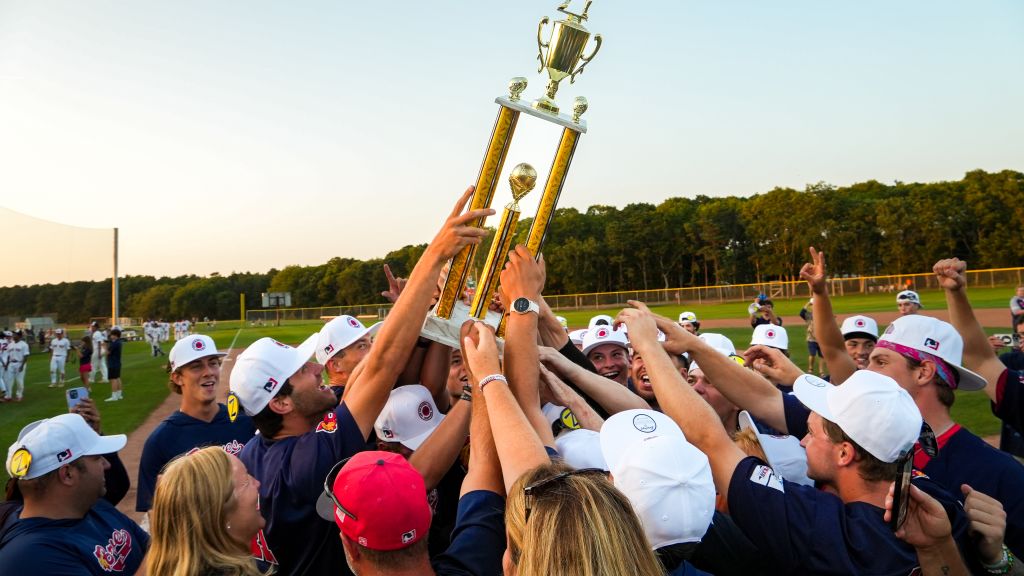
Hyannis hasn’t won a Cape League title since 1991. That’s the other opportunity it presents: the chance to make history.
“We sell that you’re trying to break a drought here, you’re trying to make history,” Chase said. “If there’s any team or fanbase that is starving for a championship, it’s [Hyannis].”
The job isn’t finished when the season starts. Each Cape League team experiences some roster churn. Players get injured, shut down by their college coaches, or leave for other reasons. Pickard estimated the team rostered about 60 players over the course of last season – a higher number than normal.
“It’s our job to make sure that there’s always 30 players on the roster … performing at a high level and keeping us competitive every day,” Pickard said.
Players – especially pitchers – are thrust into new roles and situations over the course of the season due to the roster turnover.
“We definitely will have guys who come here thinking they’re going to relieve, and then they end up starting every few games,” Pickard said.
While these positional changes can be difficult, they present a “great opportunity for players to show off their versatility in front of scouts,” Pickard said – which is what the Cape League is all about.
“If there’s someone who’s a second baseman, but they’re capable of playing the outfield … it would be great to see that player step up,” Pickard said.
Some decisions are harder than others. All Cape League teams are forced to make dreaded but inevitable roster cuts. But according to Chase, Hyannis makes these tough calls as infrequently and empathetically as possible – “it’s not something we enjoy doing,” he said.
Chase said the Hawks usually cut the fewest players of any Cape League team, and they try to do it before the players even get to the Cape.
“It’s not a pleasant thing when your parents are coming up and you’re planning on being there and all of a sudden we tell you … you need to go home,” Chase said. “So we’re constantly watching players throughout the season. If there’s a player that we may not think is doing well, we will let them know in April or May … so that they can make other plans with their summer.”
Cutting players is a last resort, since the Cape League is all about helping players develop and giving them exposure to scouts above all else.
“There are a decent chunk of guys that we’re going to give the benefit of the doubt to,” Chase said. “They’re going to surprise based on their regular-season stats. You’re going to think initially, ‘Why do we stick with them?’ And you’re going to find out why as we go through the season.”
Chase mentioned JB Middleton – a 2023 Harbor Hawks pitcher who is now the Colorado Rockies’ No. 7 prospect – as a player Hyannis helped unlock his potential by sticking with him after an underwhelming season.
Middleton had an underwhelming 8.68 ERA in only 9.1 innings in his first year at the University of Southern Mississippi, but lowered that figure to 3.24 with the Hawks and took on a bigger role in his remaining years at Southern Miss, eventually going 45th overall to Colorado in the 2025 MLB Draft.
“It’s always a mutual thing, what we need and what’s best for the player,” Chase said.
Chase said roster cuts after players are on the Cape are kept to an “extreme minimum” – six or fewer per season. When a player gets cut after coming to Hyannis, it’s not because he’s struggling statistically – it’s because of confidence issues. Only at that point will the Hawks cut him free to pursue other opportunities.
“You’re certainly not trying to be harsh,” Chase said. “But you’re also preparing them for … professional baseball. This is a results-based business.”
It’s extremely difficult to build a competitive 30-man roster of collegiate ballplayers, especially at a level where results vary wildly from season to season. But in Hyannis, the process has not only led to four consecutive playoff berths – but, more importantly, is led by precision and empathy.