J.D. Rogers hasn’t garnered the sensational collegiate accolades that many of his Cape Cod Baseball League peers have.
In three seasons at Vanderbilt, Rogers has accumulated just 27 plate appearances, recording seven hits. Following limited game action for the Commodores, Rogers’ time playing for the Brewster Whitecaps in the 2024 summer presents him with a pivotal opportunity.
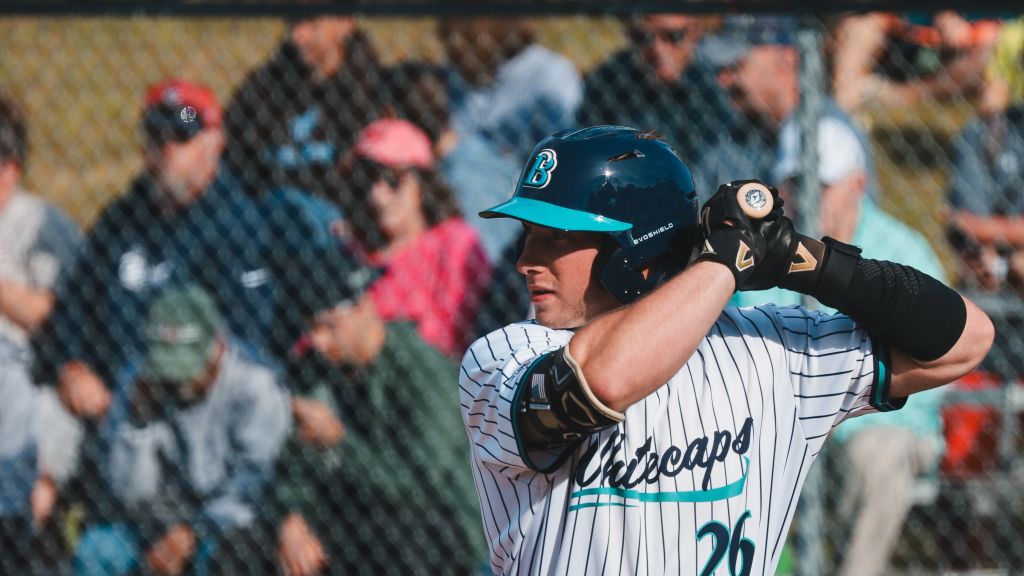
So far he’s taken advantage of that opportunity, reaching base two or more times in all three games he’s played in. His .545 (6-for-11) stretch is tied for second in the Cape League in batting average while his OPS also ranks second at 1.160. A simplistic approach and a relentless two-strike mentality have ignited early success.
“I’m being consistent in my approach and making sure I have my best focus each and every pitch,” Rogers said. “I'm not scrambling around. I'm locked in on one speed, one pitch. And that just so happens to be the fastball.”
Rogers was the top-ranked outfielder out of Indiana’s 2021 class per Perfect Game, but he hasn’t been able to find his footing as an everyday player on Vanderbilt’s ultra-competitive roster.
He’s found success in college by adding defensive flexibility in the outfield mixed with above-average speed. In the 2024 season, Rogers played six games in right field, three in center and four in right. He’s shown similar adjustability so far in Brewster, playing in both left and right field. Though it’s offensively where he’s made his mark the most.
Slotted in the seven-hole on opening day, Rogers quickly made his presence in the lineup known. Although he started the season with a strikeout, the competitiveness of the at-bat was evident, working six pitches on Y-D starter Kellan Montgomery.
Then Rogers went on a tear, rattling off a single in each of his next three at-bats. After falling behind 1-2 in the count, Rogers poked a ball through the left side with a shortened approach. Leading off the seventh inning with the game tied 1-1, Rogers took the first pitch he saw into right field for another base hit.
Later in the ninth, still tied 1-1, Rogers chopped a 2-0 fastball up the middle. Red Sox second baseman Phoenix Call collected the ball but Rogers beat the throw, utilizing his plus speed. He then stole second base but was left stranded on the bases.
“J.D. was a perfect example of staying within himself,” Shevchik said of Rogers after that game. “It was gonna be hard to hit one out of this park today with the wind blowing straight in but he stayed within himself, put the ball in play and was able to find some patches of grass in the outfield.”
In the Whitecaps’ home opener Sunday evening, Rogers was bumped up one spot to the six-slot in the batting order. Again, his night started with a long at-bat (7 pitches) that ended with a strikeout. Rogers fell behind 1-2 in his second at bat but shortened his stride again, ripping a ball up the middle. He added a walk while scoring two of Brewster’s four runs in a one-run win.

“Honestly I’m playing with a chip on my shoulder and trying to play hard and beat everything out,” Rogers said. “Sometimes a lot of guys come into summer ball lackadaisical but really I'm just trying to take each game I get to play seriously.”
Following two strong games, Shevchik moved Rogers up to the leadoff spot in Brewster’s game against Hyannis. Rogers grounded out to the pitcher in his first at bat after falling behind 1-2 and fouling off a pitch but again got back to his simplistic approach.
In his next at bat, Rogers faced a 2-2 count before lacing a ball over the third baseman’s head. He grounded out in his third at bat but battled back from down 0-2 in the count, fouling off two pitches while seeing two balls.
Rogers walked on a seven-pitch at bat in the seventh then singled again in the ninth after falling behind 1-2 and fouling off two pitches.
“With two strikes, I like to really see the ball out of the pitcher's hands so I don't really like to have too big of a load,” Rogers said while explaining his two-strike approach. “I just like to get my feet in the ground, feel my legs underneath me and see the ball as long as I can.”
As the CCBL experiments with Blast Motion data to track swing speeds and paths, Rogers puts forward a compelling case. According to Joe Tourville with Blast Motion, Rogers’ batting practice swings average 70 mph but have peaked at 78 mph (It’s important to note that Blast Motion is currently being used mainly for batting practice, not games. Evaluators are waiting for in-game sample sizes to grow).
Additionally, Rogers has a flat, level swing according to the metrics that produces base hits but infrequently drives balls into the gaps. All six of his hits have been singles. For Rogers, though, it’s a simple approach that has led to early success.
“It's just competing and battling each and every pitch, but trying to be consistent throughout the game and being able to adapt and adjust when I need to,” Rogers said.
Title Photo Credit: Avery Raimondo